


It rained for forty minutes yesterday, and your backyard is still a pond. The best yard drainage solutions Port St Lucie homeowners can use start with one question: where is the water supposed to go? Fix that, with regrading, a French drain, or both, and the puddles stop.
This guide covers why our yards hold water, which fixes work, what you can try yourself, and when it is smarter to bring in a crew.
Why do Port St Lucie yards hold water after heavy rain?
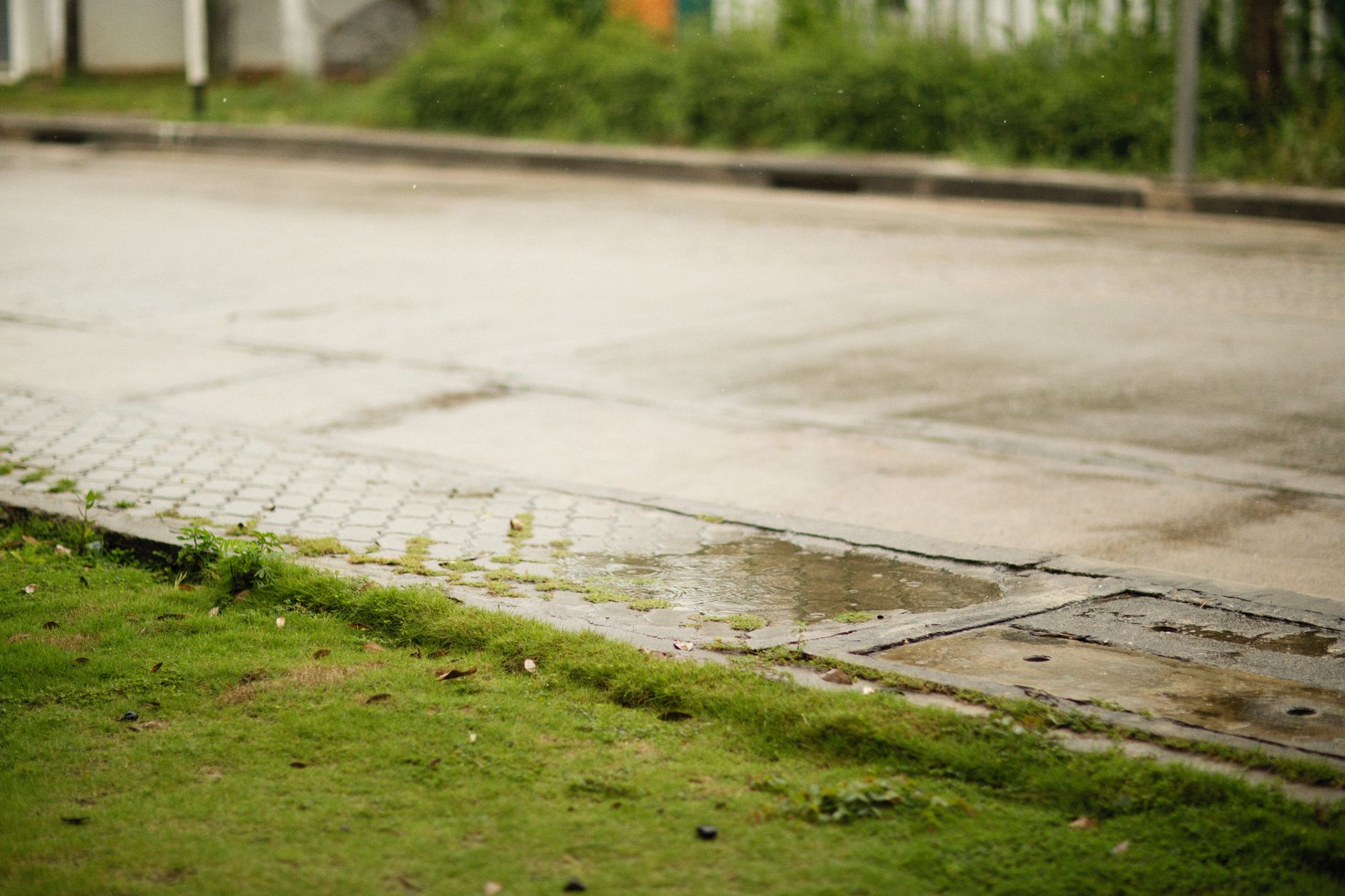
Most of our lots are very flat. With almost no slope, water has no reason to leave, so it settles wherever the ground sits lowest. Summer storms can drop a lot of rain fast, and the soil often cannot absorb it quickly enough.
A few things make it worse:
- Compacted soil: construction equipment packs the ground, and rain sheets across it instead of soaking in.
- A high water table: in the wet season the ground underneath is already full.
- Low spots next to the house or fence: settling over the years leaves dips that collect water.
- Downspouts that dump at the foundation: a roof sends a surprising volume of water to one small patch.
- Neighboring lots: a yard that sits a little lower than the one next door collects its runoff.
How do you tell if you have a drainage problem or just a wet week?
A yard that is soggy for a day after a big storm is normal. A yard that stays wet for several days, or smells swampy, has a drainage problem. Watch for these signs:
- Water standing more than 48 hours after rain stops.
- Thin, yellow, or dead patches of grass in the same spots every summer.
- Mosquitoes breeding in low corners.
- Mulch or soil washing out of beds onto the lawn or driveway.
- Damp walls, stained stucco, or water collecting along the slab.
Walk your yard during a downpour with an umbrella and note where water pools and which way it moves. That ten-minute walk tells a contractor more than any description.
Can regrading fix standing water?
Often, yes. Regrading means reshaping the soil so the ground slopes gently away from the house toward a place the water can go, such as a swale, a street, or a drain. Even a few inches of fall over a long run makes a big difference on a flat lot.
Regrading works best when low spots are shallow and there is somewhere for the water to exit. It also pairs well with new turf: if you are already planning sod installation, the grade should be corrected first. Laying new sod over a low spot just gives the water a green carpet to sit on.
The catch is that regrading cannot create an exit that does not exist. If every neighboring yard is just as flat, the water needs a pipe, not just a slope.
What is a French drain and when does it make sense?
A French drain is a trench lined with fabric, filled with gravel, and fitted with a perforated pipe. Water seeps into the gravel, enters the pipe, and travels along a slight downward slope to an outlet. It is one of the most reliable yard drainage solutions Port St Lucie properties can get, because it handles water that regrading alone cannot move.
A French drain makes sense when:
- Water collects along a fence line, patio edge, or the side of the house.
- You have a low spot that cannot be filled in without creating a new problem.
- The ground stays saturated for days, not hours.
Its performance depends on getting the details right: pipe slope, a proper outlet, and the right gravel and fabric. A drain that dumps into a dead end is just a buried puddle.
What can you try yourself before hiring anyone?
A few low-cost steps help with mild problems:
- Extend your downspouts several feet from the house with solid pipe or flexible extensions.
- Clear gutters and drain grates so water is not spilling over the edge.
- Aerate compacted lawn areas so rain can soak in.
- Pull mulch back from the foundation and keep beds from forming a dam that traps water.
- Check your irrigation. A leaking zone or overwatering can turn a damp spot into a swamp, and a well-planned sprinkler system with a working rain sensor avoids adding water the sky already supplied.
If you try these and the puddle is back after the next storm, the problem is in the grade or the soil, and it is time for a real fix.
We will walk the property, see where the water sits, and tell you honestly whether regrading, a drain, or a simple fix will do the job.
When should you call a pro?
Call a professional when any of these are true:
- Water is reaching the slab, garage, or entry of the house.
- The same area floods every rainy season no matter what you do.
- You need to move a lot of soil or change the grade across the whole yard.
- The fix needs a buried pipe, an outlet, or a connection to a drainage swale.
- You are about to install sod, pavers, or a new landscape design and want the grade right first.
Drainage is the foundation of every other yard project. Planning it into a full landscape design in Port St Lucie costs far less than digging up finished beds to fix it later. If your yard is part of a bigger plan, St Lucie Landscape can build the grading and drainage in from day one.
What does a drainage project look like from start to finish?
We start with a site visit, ideally on a wet day or after you have photos of the problem. We look at the slope, the soil, downspouts, and where the water could realistically go. Then you get a written quote that explains the approach and what it covers.
The work itself is usually a matter of days for a typical residential lot: reshaping soil, trenching, installing pipe and gravel, and restoring the surface. We protect irrigation lines and fix the lawn along the trench so it blends back in.
We serve Port St Lucie and nearby communities across the Treasure Coast, so ask us if you are not sure your street is in range.
Frequently Asked Questions
How long should water stand in my yard after rain?
Water that is gone within a day is normal. If puddles stay more than 48 hours, or the ground stays squishy for days, you likely have a grading or soil problem worth fixing.
Will a French drain work on a flat lot?
Yes, but the pipe still needs a gentle slope and a place to discharge, so the design has to be planned carefully. On very flat lots, the outlet is usually the hardest part to get right.
Can I just add soil to fill the low spot?
Sometimes, for a small shallow dip. But adding soil can push water toward a neighbor or your foundation, so check where the water will go first.
Should I fix drainage before installing new sod?
Yes. New sod over a low spot will stay wet and often rots. Correcting the grade first gives the turf a much better chance to root.
How much do drainage solutions cost in Port St Lucie?
It depends on the size of the area, the length of any drain, soil conditions, and whether the water has an easy outlet. We give you a written quote after seeing the yard, at no cost.
Standing water does not fix itself, and every summer storm makes the damage worse. As a local crew that works flat Port St Lucie yards, we will find the cause and give you a clear written quote at no cost.
Get Your Free Quote