


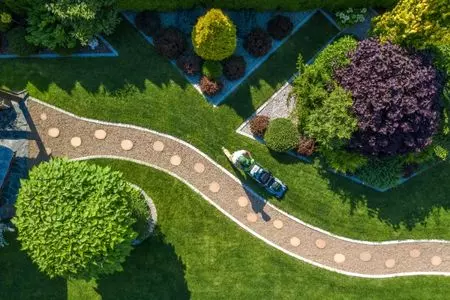
Professional hedge trimming in Port St Lucie means shaping your hedges at the right time, with the right cuts, and hauling every clipping away, so the plants stay full, dense, and inside the lines you want. Done well, a hedge frames your home and gives you privacy. Done badly, or not at all, it turns into a leggy, bare-centered wall that drops leaves on the neighbor's side of the fence.
You may know this one. In March the ligustrum along your side yard looked perfect. By June, after a few weeks of daily storms and heat, it is reaching for the gutter and the mailbox has vanished behind it. Florida hedges do not grow politely. We handle the trimming so you can get your weekends back and your hedge keeps its shape. For the rest of the yard, our lawn care in Port St Lucie service pairs well with regular hedge work.
What our hedge trimming includes
Large privacy hedges and tall screening plants come first, because they take the most skill and make the biggest difference to a property. Low foundation shrubs and borders follow the same standards.
- Privacy and screening hedges: height and width control on tall ligustrum, viburnum, clusia, and similar plants along property lines and pool areas.
- Shaping: a slightly wider base than top so sunlight reaches the lower branches and the hedge stays full to the ground.
- Overgrown hedge recovery: staged cutbacks that bring a neglected hedge back to a manageable size without shocking the plant.
- Foundation shrubs and borders: trimming of the lower plantings around the house, walkways, and entry so nothing blocks windows or lights.
- Clean tools and cuts: sharp blades make clean cuts that heal faster, which matters in our humidity.
- Full cleanup: clippings raked, blown off hard surfaces, and hauled away.
Why technique matters for Florida hedges
Hedges here grow almost all year, which tempts people to shear them flat and tight on a regular basis. Constant shearing builds a thin shell of leaves on the outside while the inside goes bare and brown. Better technique is to trim often enough to remove only a small amount each time, keep the base wider than the top, and occasionally reach inside to thin out crowded branches so air can move through.
Airflow matters because humidity feeds fungus and scale on dense, wet foliage. A hedge that is thinned and shaped properly dries faster after a storm and holds up better against pests. If your plants look sparse and you suspect more than a trimming issue, our landscape design in Port St Lucie team can talk through replacements or a better plant choice for the spot.
How often should hedges be trimmed here?
The short answer: about every six to eight weeks in the warm, rainy months for fast growers, and every eight to twelve weeks in winter. Formal, tightly clipped hedges need the shorter interval. Looser, natural-form shrubs can go longer between visits.
Timing also matters for the plant. Light shaping works most of the year, but heavy cutbacks are best in late winter or early spring, ahead of the main growth push. We avoid hard pruning right before a cold snap, and we are careful in the middle of hurricane season, when plants have less time to recover before the next storm.
How it works, step by step
- Tell us about your hedges. Send your address and a quick description through the online quote form, including roughly how tall they are and how long the runs are.
- We look at the property. We identify the plant species, check the height and condition, and note access, ladders needed, and anything near power lines or fences.
- You get a clear quote. One-time trim, recurring visits, or a staged recovery plan, with no surprises.
- We trim and shape. We cut to a consistent line, protect nearby plants and the lawn, and keep the base fuller than the top.
- We clean up. Clippings are raked, blown off, and hauled away, and we leave the driveway and walks clean.
- We set the schedule. Visits fit your hedge type and the season, and shift when storms or heavy growth call for it.
What affects the cost of hedge trimming
We do not post a flat rate because no two hedges are alike. These are the factors that move a quote.
- Length and height: a long, ten-foot privacy hedge takes far more time than a low border by the front walk.
- Starting condition: an overgrown hedge needs a heavier first visit before routine trims keep it in shape.
- Access: ladders, tight side yards, slopes, and spots behind fences all add time.
- Plant type: some species need hand shears and careful cuts, while others tolerate power trimmers.
- Frequency: regular visits keep each trim light and fast, while seasonal catch-up work costs more per visit.
- Debris: a big cutback generates a lot of material to haul away.
For a broader sense of what outdoor work runs in our area, read how much landscaping costs in Port St Lucie.
Why local experience matters
Port St Lucie has wide, flat lots in newer subdivisions and mature, shaded streets in older ones, and hedges behave differently in each. Strong sun and sandy soil stress plants between storms, summer rain pushes quick, soft growth, and salt-tinged breezes closer to the river affect some species more than others. Many neighborhoods have HOA rules on hedge height and street frontage, so a trim that looks fine to you may still draw a notice. A crew that works these yards every week learns which plants rebound from a hard cut, which ones will not, and how to leave a hedge ready for the next storm season.
Areas we serve
Our home base is Port St Lucie, and we also work in nearby communities including Stuart, Jensen Beach, and Fort Pierce. If you are not sure your street is covered, send the address and we will confirm.
Tell us what you have and we will send a clear quote at no cost. One-time trim or recurring visits, your call.
Request your free hedge trimming quote online. Want the whole property looked after? Start at our Landscaping in Port St Lucie home page.
Frequently Asked Questions
How often should hedges be trimmed in Port St Lucie?
Most fast-growing hedges, such as ligustrum and clusia, need a trim every six to eight weeks during the warm, rainy months. In the cooler, drier winter months, every eight to twelve weeks is usually enough. Formal, tightly shaped hedges need the shorter interval to keep their lines crisp.
What is the best time of year to trim hedges in Florida?
Light shaping can happen most of the year here because plants grow nearly year round. Heavy cutbacks are best done in late winter or early spring, before the main growth surge. We avoid hard pruning right before a cold snap or in the thick of hurricane season, when plants have less time to recover.
How much does hedge trimming cost in Port St Lucie?
Price depends on the linear feet of hedge, its height, how overgrown it is, and whether you want the clippings hauled away. A low foundation hedge is quick work, while a ten-foot privacy hedge along a property line takes much longer. We look at the property and give you a clear quote before any work starts.
Can you cut my overgrown hedge back without killing it?
Often yes, but it depends on the plant. Many Florida hedge species such as ligustrum and viburnum rebound well from a hard cutback, while others will not regrow from bare wood. We check the species and how much green growth remains, then step the cutback over one or two visits when needed.
Do you haul away the clippings?
Yes. Every visit ends with raking and blowing off the driveway, walks, and beds, and the clippings leave with us. Let us know in advance if your community has a specific pickup rule or if you want something left for mulch.
Do you trim hedges for HOA properties?
Yes. Many Port St Lucie communities have rules on hedge height and neat street frontage, and we trim to those standards. Share your HOA notice or guidelines with the quote request and we will work to them.
A local crew that knows Port St Lucie hedges will keep them full, shaped, and under control. Request your free quote online today.
Get Your Free Quote