


You bought three gorgeous palms on a sunny Saturday, planted them by Sunday night, and by next month the fronds are yellow and one is leaning like it had a long evening. The best time to plant palm trees in florida port st lucie is late spring through early fall, when the soil is warm and the rainy season does a lot of the watering for you.
Below you will find the planting window, how far apart to space palms, how to water through our heat and summer downpours, and when staking actually helps. It is the same checklist we would walk through on your lot.
When Is the Best Time to Plant Palms in Port St Lucie?
Palms are tropical, so they root fastest when the ground is warm. In Port St Lucie that means roughly May through September, with the start of the rainy season in late spring being the sweet spot. New roots grow quickly in warm soil, and regular afternoon rain cuts down on hand watering.
Cooler months are not off limits, but growth slows and a cold snap can hurt a freshly planted palm that has not rooted in yet. If you must plant in winter, choose cold-hardy types, skip planting right before a forecast freeze, and be ready to protect the tree.
One caution: the middle of the rainy season brings storms. Plan your install early in the window so the root system has time to grab hold before the heaviest wind and rain arrive.
How Far Apart Should You Space Palm Trees?
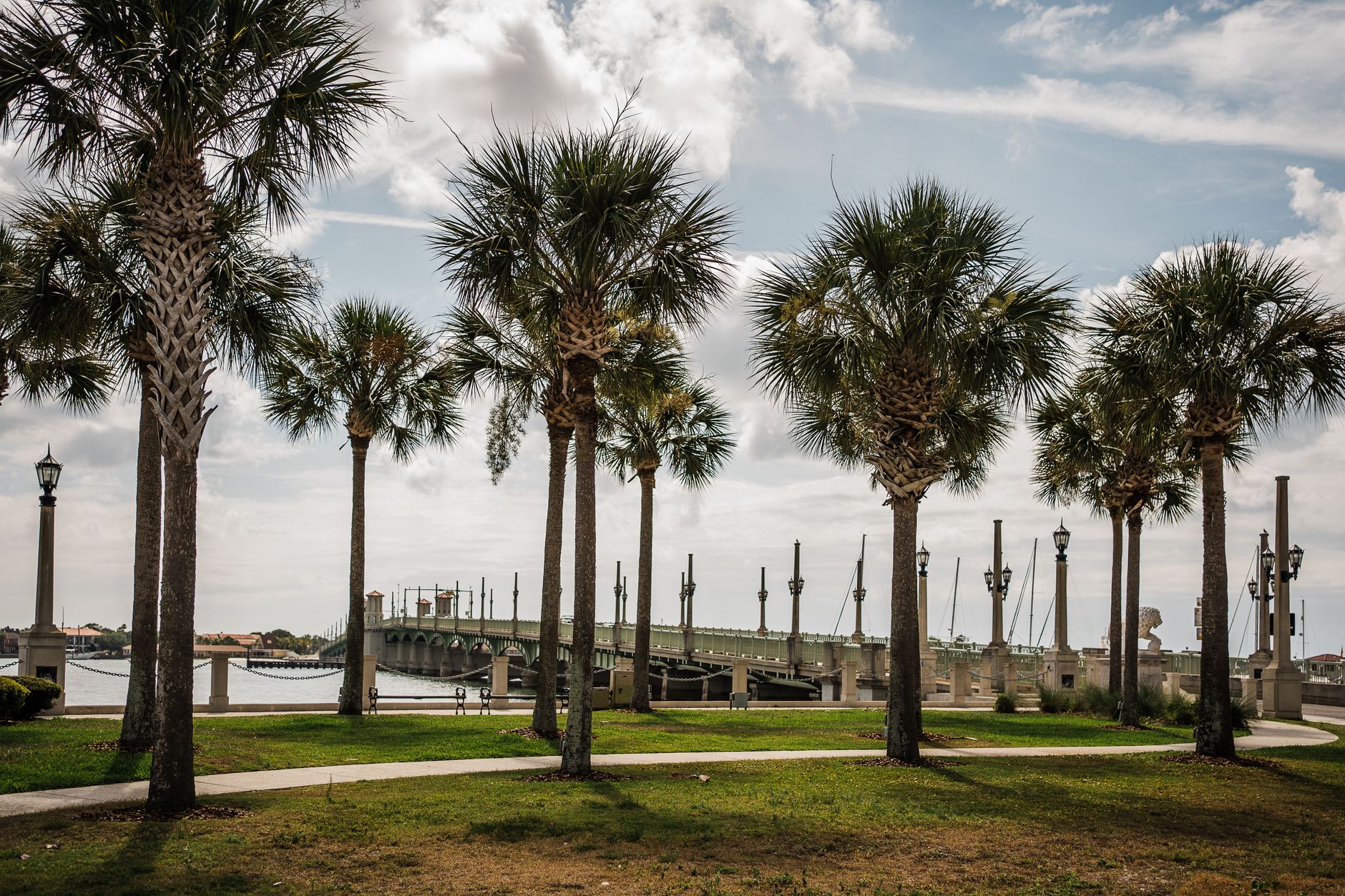
Crowding is one of the most common mistakes we see. A palm that looks small in a 15-gallon pot can spread its crown wide in a few years, and nobody enjoys fronds scraping a roof or a power line.
- Check the mature size first: look up the full height and crown spread of the exact species before you pick a spot.
- Keep distance from the house: leave room for the crown, not just the trunk, and stay clear of eaves, gutters and overhead lines.
- Mind the roots: keep palms a safe distance from pools, septic systems, irrigation lines and walkways.
- Space for the look you want: clustered palms can be planted closer on purpose, while a single specimen needs open space to show off.
How Do You Plant a Palm So It Survives?
Planting depth matters more than most people think. Set the root ball so the top sits level with, or very slightly above, the surrounding soil. Burying the trunk is a classic way to rot a palm, and sandy soil here settles, so err on the high side.
- Dig a hole two to three times as wide as the root ball but no deeper than it.
- Set the palm in place, check that it is plumb, and backfill with the native soil.
- Build a shallow soil ring around the edge to hold water over the roots.
- Water deeply right away to settle the sand around the roots.
- Add 2 to 3 inches of mulch, kept a few inches back from the trunk.
How Often Should You Water New Palms in Heat and Rain?
Sandy soil drains fast, so a new palm can dry out even in a wet month. During the first few months, water it deeply at the root ball often enough that the soil stays damp but never soggy. Then taper off gradually as the roots spread into the surrounding ground.
In the rainy season, check the soil before turning on the irrigation. If it rained hard the day before, skip the cycle. Standing water around the trunk is as risky as drought. Established palms in Port St Lucie usually need far less help than the ones you just installed, which is why a good irrigation setup is worth sorting out on day one.
We will look at your yard, suggest the right species and spacing, and give you a written quote. Request your free quote, no obligation.
Do Palm Trees Need Staking?
Often, yes, at least for a while. A tall palm with a small root ball can catch the wind like a sail, and our summer storms are not gentle. Staking holds the trunk steady while new roots anchor it.
- Use wide, padded straps or bands so the trunk is not cut or bruised.
- Brace the palm from several directions rather than relying on one stake.
- Leave a little flex, because a trunk that can sway slightly builds stronger roots.
- Plan to remove the supports once the palm stands firm, usually after the first growing season.
What Else Helps Palms Thrive Here?
Palms are not hungry for general lawn fertilizer. A product made for palms, applied on a sensible schedule, helps prevent the yellowing and frizzled new fronds that come from missing nutrients in our sandy soil. Hold off on heavy feeding for the first weeks after planting.
Pruning is the other place people overdo it. Cut only fronds that are fully brown or hanging, and leave green ones in place, because they are still feeding the tree. Palms also pair well with low-water plants, which is the idea behind Florida-friendly landscaping in Port St Lucie.
If you are placing palms as part of a bigger project, our landscape design and installation service plans the palms, beds, irrigation and lighting together so nothing fights for space. Tall palms also make a strong front-yard focal point, as in our curb appeal makeover ideas.
Ready to add palms to your property? St Lucie Landscape handles the whole process, from choosing the tree to getting it in the ground.
Frequently Asked Questions
Can I plant palm trees in winter in Port St Lucie?
You can, but roots grow slowly in cool soil and a cold snap can damage a new palm. Choose hardy species, avoid planting just before a freeze, and be ready to cover or protect the tree.
How deep should I plant a palm tree?
Set the top of the root ball level with, or slightly above, the surrounding soil. Planting too deep buries the trunk and invites rot.
How long should I water a newly planted palm?
Keep the root ball evenly damp for the first few months, then taper off as the palm roots into the surrounding soil. In the rainy season, check the soil first so you do not overwater.
Why are the fronds on my new palm turning yellow or brown?
Some browning is normal transplant stress. Persistent yellowing can point to too little or too much water, a planting depth problem, or a nutrient shortage in sandy soil, so check those first.
Should I stake a newly planted palm?
Taller palms usually benefit from padded bracing during the first season so wind does not rock the root ball. Remove the supports once the palm stands firm on its own.
Palms planted in the right season with the right spacing and support save you from replacing them later. Request a free quote today and we will help you plan it for your Port St Lucie yard.
Get Your Free Quote